
Categories
Cibolo Real Estate MarketPublished October 3, 2026
Mortgage Rates Are Above 7% Again. What Does That Mean for Cibolo Home Buyers and Sellers?


If you’ve been thinking about buying or selling a home in Cibolo, you’ve probably been paying attention to mortgage rates. And lately, the news hasn’t exactly been encouraging.
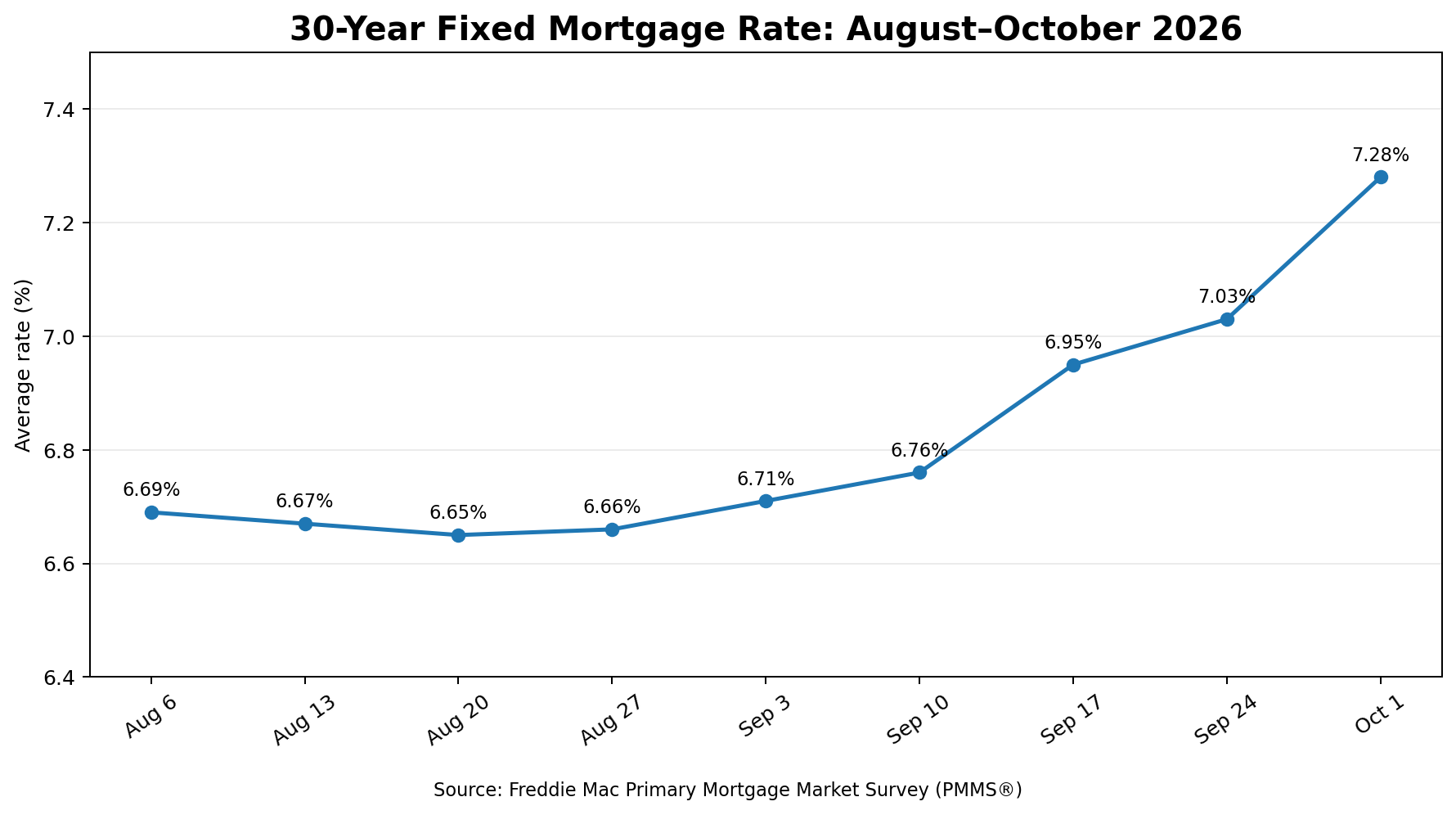
As of October 1, 2026, Freddie Mac reported the average 30-year fixed mortgage rate at 7.28%. That’s up from 6.76% just three weeks earlier. For buyers, that matters because the interest rate directly affects your monthly payment and how much home you may be able to afford. For sellers, it matters because those same higher payments affect the buyers who may be considering your home.
But I don’t think the right question is simply, “Are interest rates too high to buy a house?”
The better question is: “Does buying or selling a home make sense for me in the market we have today?”
I’ve been in real estate long enough to see very different markets, and one thing I’ve learned is that waiting for the “perfect” market usually isn’t much of a strategy. Rates change. Home prices change. Inventory changes. Your finances and your reasons for moving change.
So instead of trying to predict exactly where mortgage rates will go next, let’s look at what today’s rates actually mean for buyers and sellers in Cibolo and the San Antonio area—and what options you may have if you’re considering making a move.
Why Are Mortgage Rates Above 7%?
One of the biggest misconceptions I hear is that the Federal Reserve directly sets mortgage rates. It doesn’t.
Mortgage rates are influenced by several things, including inflation, the overall economy, the bond market and expectations about what the Federal Reserve may do next. When investors believe inflation may remain higher or interest rates may stay elevated longer, mortgage rates can move higher. When inflation cools and the economic outlook changes, mortgage rates can move lower.
That’s also why mortgage rates can change even when the Federal Reserve hasn’t changed its target interest rate that day.
In September 2026, the Federal Reserve raised its target range for the federal funds rate by a quarter of a percentage point and said inflation remained somewhat elevated. Mortgage rates moved higher during the weeks that followed, with Freddie Mac’s average 30-year fixed rate reaching 7.28% on October 1.
The important thing for a home buyer is that nobody knows exactly where mortgage rates will be six months or a year from now. We can watch the economy and forecasts, but I would never tell someone to make a major real estate decision based solely on a prediction that rates are definitely going up or definitely coming down.
What Does a 7% Mortgage Rate Actually Do to Your Payment?
This is where interest rates become real. A change of half a percentage point may not sound like much, but over a 30-year mortgage it can make a noticeable difference in the monthly payment. That affects how much a buyer can comfortably spend—and ultimately affects sellers too, because buyers usually shop based on a monthly payment, not just the price on the sign in front of the house.
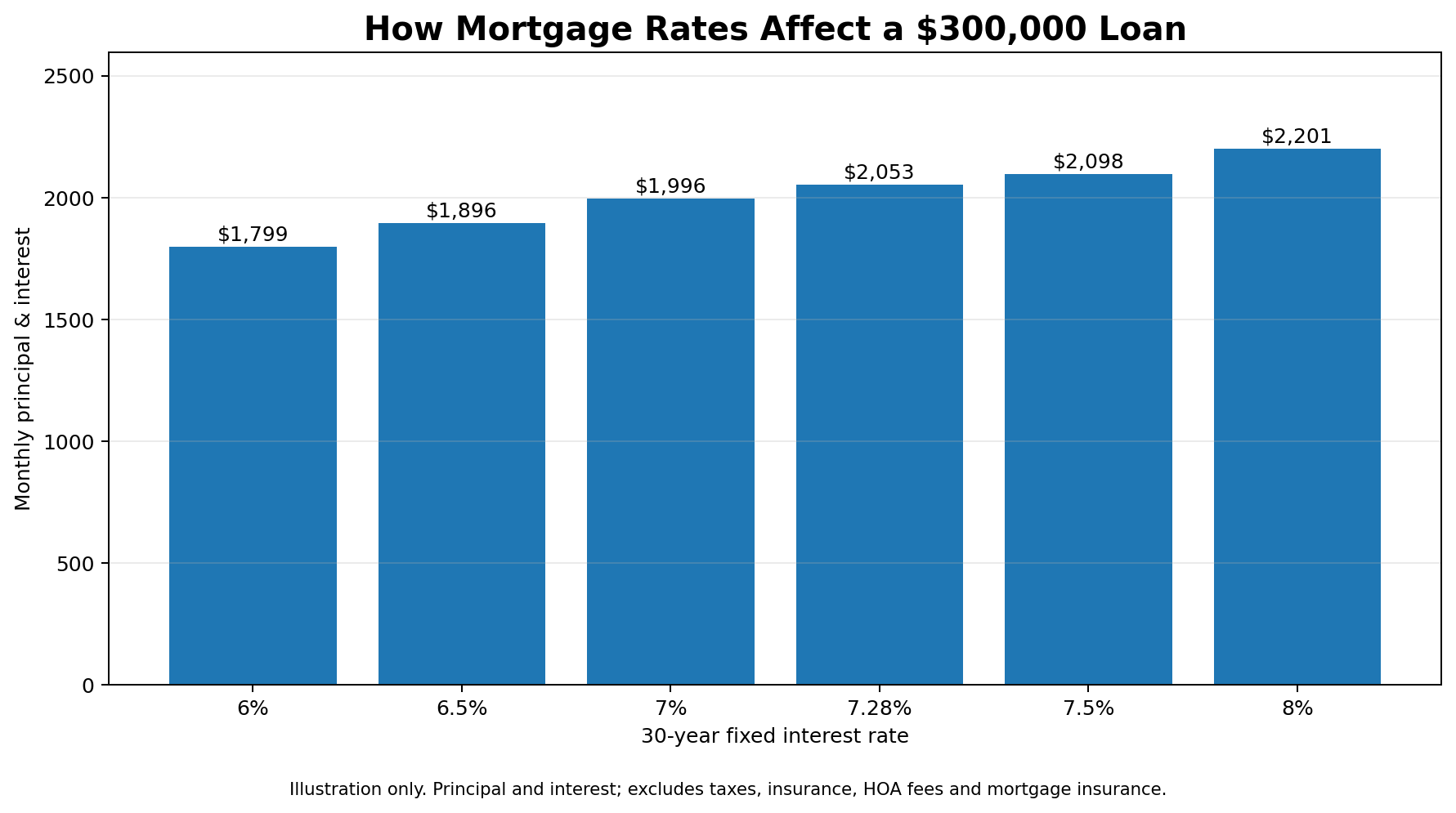
On a $300,000 30-year fixed mortgage, the principal and interest payment is about $1,799 per month at 6%. At 7.28%, that payment is about $2,053 per month—roughly $254 more each month before property taxes, homeowners insurance, HOA fees or mortgage insurance are included.
That’s why I’m not going to tell a buyer that interest rates don’t matter. They do. But the interest rate is only one part of the decision. The price you pay for the home, seller concessions, lender incentives, your down payment, loan program and how long you expect to own the property can all matter too.
This is also why I encourage buyers to start with the payment they’re comfortable with rather than deciding they need a certain-priced house. Once we know the payment that makes sense for you, we can work backward and determine what price range and financing options are realistic.
Should You Still Buy a Home When Mortgage Rates Are High?
Maybe. I know that’s not the answer most real estate marketing gives you, but buying a home isn’t automatically the right decision just because you qualify for a mortgage.
If the payment stretches your budget too far, you’re unsure how long you’ll stay in the area, or buying would leave you without enough savings for the unexpected expenses that come with owning a home, waiting may make sense.
But higher mortgage rates by themselves don’t necessarily mean you should stop looking.
A slower market can sometimes give buyers something they didn’t have when rates were lower: more negotiating power. Depending on the property and the market, that could mean negotiating the purchase price, asking a seller to contribute toward closing costs or a rate buydown, having more time to evaluate a home, or simply facing less competition from other buyers.
New construction is another part of the equation in Cibolo. Builders may offer financing incentives, closing-cost assistance or other promotions that can make the numbers look very different from the advertised price alone. I think buyers should compare those opportunities against resale homes rather than assuming one is automatically the better deal.
And if you’re waiting because you believe mortgage rates will definitely fall, remember that lower rates could bring more buyers back into the market. That can mean more competition for the same homes. Nobody knows exactly how that tradeoff will play out.
My advice is simpler: don’t buy because someone tells you rates are going up, and don’t wait because someone promises you rates are coming down. Look at the house, the payment, your finances and your plans. If those pieces make sense together, then we have something worth considering.
What Higher Mortgage Rates Mean for Cibolo Home Sellers
Mortgage rates aren’t just a buyer issue. If you’re thinking about selling a home in Cibolo, they affect you too.
Most buyers aren’t simply shopping for a $350,000 or $450,000 house. They’re trying to figure out what monthly payment they can comfortably afford. When mortgage rates rise, that payment gets more expensive even if the price of the house hasn’t changed.
That means some buyers may lower their price range, become more selective, ask for concessions or decide to wait. For a seller, that can affect how many buyers are realistically able and willing to purchase your home.
This is one reason I believe pricing a home correctly in today’s market is so important. Your home isn’t competing only against the house that sold down the street three months ago. It is competing against the homes buyers can choose today.
In Cibolo, that can include other resale homes in your neighborhood, homes in nearby Cibolo neighborhoods and new construction. Builders may also be offering financing incentives or closing-cost assistance that a resale seller needs to understand when positioning a property.
I like to look at recent sales because they tell us what buyers have been willing to pay. But I also want to look closely at the active competition because those are the homes a buyer may be comparing with yours right now.
Higher rates don’t automatically mean you need to reduce your price or give away thousands of dollars in concessions. They mean we need to understand the competition, the buyer’s payment and how your home is positioned against the alternatives.
The goal isn’t simply to put a house on the market. It’s to position it as one of the strongest values in its competitive set.
Could a Seller Help a Buyer With the Interest Rate?
Yes. Depending on the loan program and the terms of the transaction, a seller may be able to contribute money toward a buyer’s allowable closing costs. One possible use of those funds is a mortgage rate buydown.
A buydown can reduce the buyer’s interest rate temporarily or, in some cases, permanently through discount points. The structure, limits and benefit depend on the buyer’s loan program and lender, so this is something the buyer should review carefully with their mortgage professional.
From a negotiation standpoint, this creates another option besides focusing only on price.
For example, imagine a buyer likes a home but the monthly payment is the problem. The buyer may get more immediate benefit from negotiating a seller contribution that can be used toward eligible closing costs or a rate buydown than from negotiating the same amount off the sales price. The actual numbers need to be calculated by the lender for that specific buyer.
Sellers should understand this too. Sometimes a concession that helps solve a buyer’s payment problem can make more sense than making a larger price reduction. That doesn’t mean sellers should automatically offer concessions—it means price, financing and concessions should be evaluated together when negotiating an offer.
This is also one reason buyers should have a good lender involved early. I can negotiate the real estate side of the transaction, but the lender needs to explain the financing options, calculate the payments and determine what is permitted under the buyer’s loan program.
What About VA Buyers and Military Families Moving to Cibolo?
Cibolo has a strong connection to the military community because of its location near Joint Base San Antonio, especially JBSA-Randolph and Fort Sam Houston. As a retired military member myself, I also know that a PCS move doesn’t always happen when the housing or mortgage market is exactly where you would like it to be.
For eligible buyers, a VA loan can still be an important option in a higher-rate environment. VA financing can allow eligible borrowers to purchase with no down payment in many cases, does not require monthly private mortgage insurance, and limits certain closing costs. That doesn’t mean every VA buyer receives the same interest rate or that a VA loan is automatically the best choice in every situation.
Interest rates and loan terms can vary by lender, borrower qualifications and market conditions. That’s why I encourage military and veteran buyers to compare the actual loan options available to them rather than assuming the first rate they’re quoted is the only rate available.
VA buyers may also be able to negotiate seller-paid closing costs or concessions within VA guidelines, depending on the transaction. In a market where some sellers are competing harder for buyers, those negotiations can become an important part of putting the entire deal together.
Whether you’re PCSing to the San Antonio area, leaving JBSA or simply making a local move, I think the same rule applies: start with the payment and your plans—not with a prediction about where interest rates might go next.
Should You Wait for Mortgage Rates to Come Down?
Maybe—but I wouldn’t make that decision based only on the hope that rates will be lower later.
If waiting gives you time to improve your credit, reduce debt, save more money, build an emergency fund or get into a more comfortable financial position, waiting can be a smart decision. There is nothing wrong with buying a home six months or a year from now if that puts you in a stronger position.
What I would be careful about is waiting simply because someone says mortgage rates are definitely going back to 5% or 6%. Nobody can promise that.
There’s another side to the equation too. If mortgage rates eventually fall, more buyers may decide to enter the market. More buyers can mean more competition for homes, fewer seller concessions and potentially upward pressure on prices. On the other hand, rates could remain elevated while inventory, prices and local market conditions change in other ways.
That’s why I don’t think the goal should be to perfectly time the mortgage market. The goal should be to make a good real estate decision based on the information we have today.
If you find the right home, can comfortably afford the payment, have the financial reserves you need and expect to own the property long enough for buying to make sense, a higher interest rate by itself may not be a reason to walk away.
And if those things don’t line up yet, I’d rather tell you to wait than try to talk you into buying a house you’re not financially comfortable owning.
Can You Just Refinance Later?
You may have heard someone say, “Marry the house, date the rate.” I understand the idea behind it, but I don’t think anyone should buy a home assuming they’ll definitely be able to refinance later.
If mortgage rates fall in the future and refinancing makes financial sense, that could be an option. But there is no guarantee rates will fall on a particular timeline, and refinancing isn’t automatic or free. You would still need to qualify based on the lender’s requirements at that time, and there can be closing costs associated with the new loan.
So when I’m talking with a buyer, I want the home to make sense based on today’s payment. A future refinance should be viewed as a possible opportunity—not something you need in order to afford the house.
If rates eventually fall and you can refinance into a better loan, great. But I would rather see someone purchase a home they can comfortably afford today than depend on something none of us can guarantee will happen tomorrow.
The Bottom Line for Cibolo Buyers and Sellers
Mortgage rates matter. At 7% or higher, they have a real impact on monthly payments, buying power and the number of buyers who may be able to afford a particular home. I don’t think we help anyone by pretending otherwise.
But mortgage rates are also only one part of the real estate market.
If you’re buying a home in Cibolo, look at the entire opportunity: the price, monthly payment, condition of the home, available inventory, seller concessions, financing options, new-construction incentives and how long you expect to own the property.
If you’re selling a home in Cibolo, understand that today’s buyer is looking at those same numbers. Pricing and positioning your home against the properties competing for that buyer—including new construction—matters even more when financing costs are higher.
I don’t believe every buyer should buy right now, and I don’t believe every homeowner should sell right now. My job is to help you understand the market, look at the numbers and make the decision that makes the most sense for you.
Markets change. Interest rates change. Your reasons for moving are personal. The right decision starts with understanding how all three fit together.
Frequently Asked Questions About Mortgage Rates and Cibolo Real Estate
What is the current mortgage rate?
As of October 1, 2026, Freddie Mac reported the national average 30-year fixed mortgage rate at 7.28%. That is a national weekly average, not necessarily the rate an individual borrower will receive. Your actual rate can vary based on the loan program, credit profile, down payment, lender and other factors.
Is a 7% mortgage rate too high to buy a home?
Not necessarily. A higher rate increases the monthly payment and reduces purchasing power, but the interest rate alone doesn’t determine whether buying makes sense. I would look at the total monthly payment, your financial position, how long you expect to own the home, the price and condition of the property, and the opportunities available in the current market.
Should I wait for mortgage rates to drop before buying a home in Cibolo?
Waiting may make sense if it gives you time to improve your financial position or if today’s payment simply isn’t comfortable. What I wouldn’t do is assume mortgage rates are guaranteed to fall. If rates do decline, buyer demand and competition could also change. I would make the decision based on what works for you today rather than trying to perfectly predict the market.
How do higher mortgage rates affect Cibolo home sellers?
Higher rates can reduce a buyer’s purchasing power because more of the monthly payment goes toward interest. That can affect demand, price ranges, negotiations and requests for seller concessions. It also makes it important for Cibolo sellers to understand the homes they are competing against, including both resale properties and new construction.
Can a seller help lower a buyer’s mortgage rate?
Potentially. Depending on the buyer’s loan program and the terms of the transaction, seller contributions may be used toward allowable closing costs or a mortgage rate buydown. The buyer’s lender should determine what is permitted and calculate the actual cost and payment benefit.
Are VA mortgage rates different from conventional mortgage rates?
They can be. VA and conventional loans are different loan programs, and the rates and terms offered to a borrower can vary by lender and individual circumstances. Eligible military and veteran buyers should compare their actual loan options rather than assuming every lender will offer the same VA rate.
Does the Federal Reserve set mortgage rates?
No. The Federal Reserve sets monetary policy, but it does not directly set the mortgage rate a home buyer receives. Mortgage rates are influenced by factors including inflation, economic conditions, the bond market and expectations about future monetary policy.
Can I refinance if mortgage rates go down later?
Possibly, but I wouldn’t buy a home assuming that you will be able to refinance. Future rates aren’t guaranteed, refinancing has qualification requirements, and there can be costs involved. I believe the home and payment should make sense based on the financing available to you today.
Thinking About Buying or Selling a Home in Cibolo?
If you’re thinking about buying or selling a home in Cibolo, Schertz, San Antonio or the surrounding area, I’m happy to sit down with you and look at the numbers.
I’m not going to tell you that now is always the right time to buy or sell. I’d rather understand what you’re trying to accomplish, look at the market and your options, and help you decide what makes sense for you.
If you’re buying, we can look at available homes, new construction, financing considerations and what your money can realistically buy in today’s market.
If you’re selling, we can look at recent sales, the homes you’re competing against and how current mortgage rates may be affecting the buyers in your price range.
No pressure. Just good information so you can make a good decision.
Kris Forchione
Broker Associate | Forchione Real Estate
Retired U.S. Military
210-972-9606
KrisForchione.com
No Team. No Group. Just Kris.
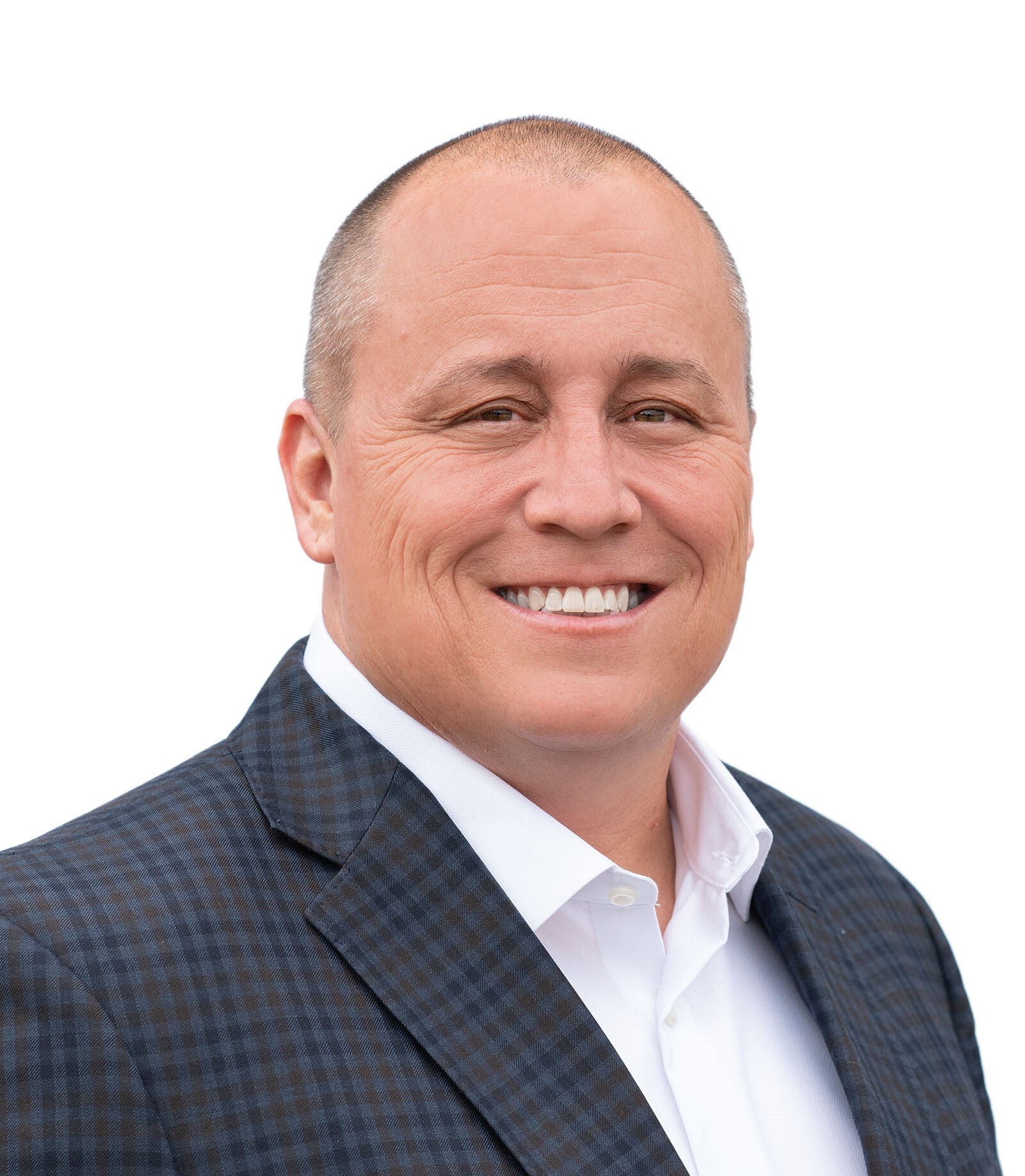
Kris Forchione
Broker Associate | Forchione Real Estate
or another way